

The Good News: Sports Betting 101: Tax Tips for Winning Without Worry 🏈🎰🎲
Sports betting, it’s everywhere. If you have a T.V., phone, computer, or access to any form of media, you have no doubt seen advertising for sports betting apps such as FanDuel and DraftKings. These apps are popular amongst sports fans, and many have won big from the comfort of their couch. That $700 hit sends you over the moon with excitement; but have you ever stopped to consider that this $700 is taxable income? Let’s get into it!
Are my sports betting winnings really considered income that needs to be taxed?
Yes, they are. The IRS is very clear that any winnings (regardless of amount received) from sports betting are considered taxable income. The total income should be reported on your Form 1040 when filing your annual tax return.
Do the sports betting apps not take out taxes for me?
Sports betting apps do not generally withhold taxes from your income and as such, it becomes your job to ensure that you pay taxes on those winnings. There are some instances in which the app may withhold taxes for you (i.e., if you win $5,000 or more in a single bet) but it is rare.
Why would I pay taxes on money the IRS doesn’t know I made?
More than likely, the IRS does know that you have made money through sports betting apps. These apps are required to file Form W-2G to report the winnings that they have provided to bettors if certain rules are met (i.e., winnings that are $600 or more and at least 300 times the amount of the wager). Also, a random audit can be performed at any time, and let’s not forget, your social security number is used to sign up for these apps making it quite easy to trace these winnings back to you.
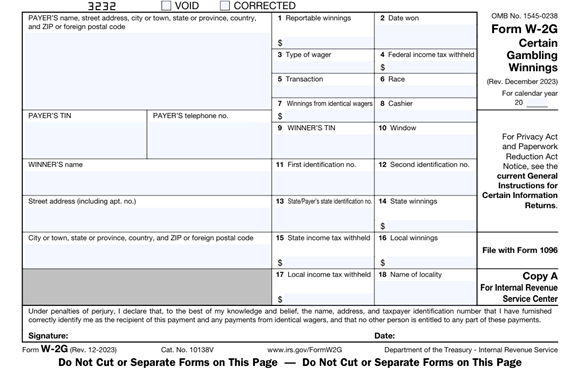
IRS Form W-2G – used to report gambling winnings
What happens if I get caught not paying taxes on this income?
If you do not report sports betting income and pay taxes on it, there are several consequences including but not limited to:
· Paying back taxes plus interest on the taxes not paid
· Failure to file penalties
· Tax liens or levies
· Criminal charges (rare for ordinary people)
So, what’s the good news?
The good news is, we are here to help you get it right and there are tax rules that can help reduce your tax liability on these winnings! While you do have to report these sports betting earnings as income, as long as you itemize deductions on your annual tax return, you can offset income with losses. For example, if you win $2,500 throughout the year and wager $2,700 during the year, you can deduct up to the amount of the winnings ($2,500) as gambling losses on your tax return. Most sports betting apps maintain an audit trail for you, so you don’t have to keep your own records to determine what you wagered, won, and lost throughout the year.
Note: The One Big Beautiful Bill Act has reduced the deduction from allowing 100% of losses to be reported up to income down to 90% of losses. This will go into effect in tax year 2026.
As always, you have Bostic Accounting here to help you get it right!
